Foraging is deeply important to Finnish food culture because it connects people directly to the land, provides genuinely wild and seasonal ingredients, and reflects a centuries-old relationship between Finns and their natural environment. Unlike many food traditions that have faded with modernisation, foraging in Finland remains a living, everyday practice rather than a nostalgic hobby. The sections below unpack the key questions around wild food, the legal framework that makes it possible, and how the tradition shapes Finnish cooking today.
What wild foods do Finns traditionally forage?
Finns traditionally forage wild berries, mushrooms, herbs, and greens from forests, bogs, and coastlines. The most prized wild foods include lingonberries, bilberries, cloudberries, chanterelle mushrooms, porcini, and wild garlic, alongside less well-known finds such as wood sorrel, nettles, and spruce shoots. These ingredients form a genuine backbone of Finnish home cooking rather than a niche interest.
Wild berries are perhaps the most universally gathered wild food in Finland. Bilberries ripen in midsummer forests, lingonberries appear in late summer and keep well into autumn, and cloudberries grow in northern bogs and are considered a true delicacy. Each berry has its own window, and experienced foragers plan their seasons around these rhythms the way others plan a weekly shop.
Mushroom picking holds an equally central place in Finnish foraging traditions. Chanterelles are the most popular, turning up in markets and home kitchens from July onwards. Porcini, funnel chanterelles, and velvet rolls are also widely gathered. Finns learn to identify edible species from childhood, and the knowledge passes between generations as a practical skill rather than a formal lesson.
Beyond berries and mushrooms, foragers collect nettles for soup in spring, wild garlic leaves along riverbanks, spruce tips for syrups and seasonings, and various wild herbs. Coastal foragers also gather sea buckthorn, whose tart orange berries are rich in nutrients and increasingly popular in both home kitchens and restaurant menus.
What is everyman’s right and how does it enable foraging?
Everyman’s right, known in Finnish as jokamiehenoikeus, is a legal principle that grants everyone in Finland the freedom to access nature, move through forests and countryside, and collect wild plants, berries, and mushrooms regardless of who owns the land. This right applies to both Finnish residents and visitors, and it requires no permission from landowners.
Everyman’s right in Finland is built around a balance between freedom and responsibility. You may pick berries, gather mushrooms, and collect non-protected wild plants freely. You may camp temporarily in nature, swim in lakes, and travel on foot or by ski across private land as long as you cause no damage and respect the privacy of homes. What you may not do is cut down trees, disturb wildlife, or take anything that requires the landowner’s explicit consent.
This legal framework is the single most important structural reason why foraging in Finnish forests remains so widespread. In many European countries, access to private land for foraging is restricted or requires permission, which limits the practice to those with rural connections or specific agreements. In Finland, the forest is effectively open to everyone, which means foraging is not a privilege of the countryside-born but a genuine option for city dwellers too.
The principle also shapes the culture around foraging. Because access is a right rather than a favour, Finns tend to treat the forest with a sense of shared stewardship. Leaving no trace, not overpicking, and respecting the ecosystem are values that accompany the right itself, passed down alongside the practical knowledge of what to pick and when.
How does foraging shape the way Finns cook and eat?
Foraging shapes Finnish cooking by embedding deep seasonality into everyday meals. When ingredients are gathered directly from nature, the cooking calendar is dictated by what the forest, bog, or coastline currently offers rather than what a supermarket stocks year-round. This produces a food culture that is genuinely seasonal in a way that goes beyond menu trends or chef philosophy.
Wild ingredients bring flavours that cultivated equivalents rarely match. A bilberry picked from a Finnish forest has an intensity that farmed blueberries simply do not replicate. A chanterelle gathered the same morning has a texture and aroma that dried or imported mushrooms cannot equal. Because Finns have access to these ingredients through foraging, the expectation of freshness and flavour is built into how they judge food quality.
Preservation techniques developed around foraging have also left a lasting mark on Finnish cuisine. Lingonberries are preserved raw with sugar to last through winter. Mushrooms are dried, salted, or pickled. Cloudberry jam is a classic accompaniment to desserts. These methods were originally born from necessity, but they have become flavour traditions in their own right, giving Finnish food a characteristic quality of preserved intensity alongside fresh simplicity.
At a social level, foraging shapes eating habits by making the sourcing of food a communal and physical activity. Families go out together, neighbours share good spots, and the act of gathering is part of the meal’s story. This connection between effort, place, and flavour gives foraged food a meaning that goes beyond nutrition, embedding it in memory and identity.
Why do Finns forage more than most Europeans?
Finns forage more than most Europeans because of the combination of everyman’s rights, vast forested land, a strong cultural tradition of self-sufficiency, and a food culture that genuinely values wild ingredients. No single factor explains it alone, but together they create conditions where foraging is practical, legal, socially normal, and culinarily rewarding.
Finland is one of the most forested countries in Europe, with around three quarters of the land covered by forest. That sheer availability of natural space means wild food Finland can realistically feed a population of foragers without pressure on any single area. In more densely populated or less forested countries, the same tradition would quickly exhaust accessible wild food sources.
The cultural dimension is equally important. Foraging in Finland is not countercultural or eccentric. It is ordinary. Children learn to identify berries and mushrooms as part of growing up. Schools sometimes include nature excursions with a foraging element. The activity sits comfortably alongside modern urban life rather than in opposition to it, which keeps participation rates high across generations.
There is also a practical economic history behind the tradition. For much of Finnish history, wild foods supplemented diets in ways that mattered, particularly in rural areas and during harder times. That history of genuine reliance on the forest created a knowledge base and a respect for wild ingredients that has persisted even as food security improved. Today the motivation is pleasure and connection rather than necessity, but the practice is the same.
When is the best season for foraging in Finland?
The best overall season for foraging in Finland runs from late spring through to mid-autumn, roughly from May to October, with different ingredients peaking at different points within that window. Each phase of the season offers its own distinct wild foods, making the full arc of the foraging year varied and rewarding.
Spring: the season of fresh greens
Spring foraging begins in May when nettles appear and are at their most tender. Wild garlic leaves, wood sorrel, and the bright green tips of spruce shoots are also gathered early in the season. These spring greens carry a freshness that reflects the first growth after winter, and they are prized precisely because they are fleeting. Spruce tip syrup, made by steeping the young tips in sugar, has become a well-known Nordic flavour that starts with this brief spring window.
Summer and autumn: berries and mushrooms
Midsummer brings the first bilberries and the beginning of chanterelle season, which many Finnish foragers consider the highlight of the year. By late summer, lingonberries ripen alongside porcini and funnel chanterelles. Cloudberries, which grow in northern bogs, peak in July and are harvested in a short, intense window. Autumn extends the mushroom season and brings sea buckthorn berries along the coast. By October, the foraging year winds down, though lingonberries can persist well into the cooler months and are often the last wild ingredient gathered before winter closes in.
How are Finnish restaurants bringing foraged ingredients to the table?
Finnish restaurants are incorporating foraged ingredients by building menus around seasonal wild produce, working directly with foragers and local suppliers, and treating wild foods as premium ingredients that define the character of a dish rather than decorative additions. This approach reflects a broader movement in Nordic cuisine toward ingredients with genuine provenance and connection to place.
The shift is significant because it moves wild food from the home kitchen into a professional context where technique and presentation amplify the ingredient’s natural qualities. A chanterelle gathered that morning can appear in a sauce, a soup, or a garnish that evening, carrying the flavour of the forest into a refined dining setting without losing what makes it special.
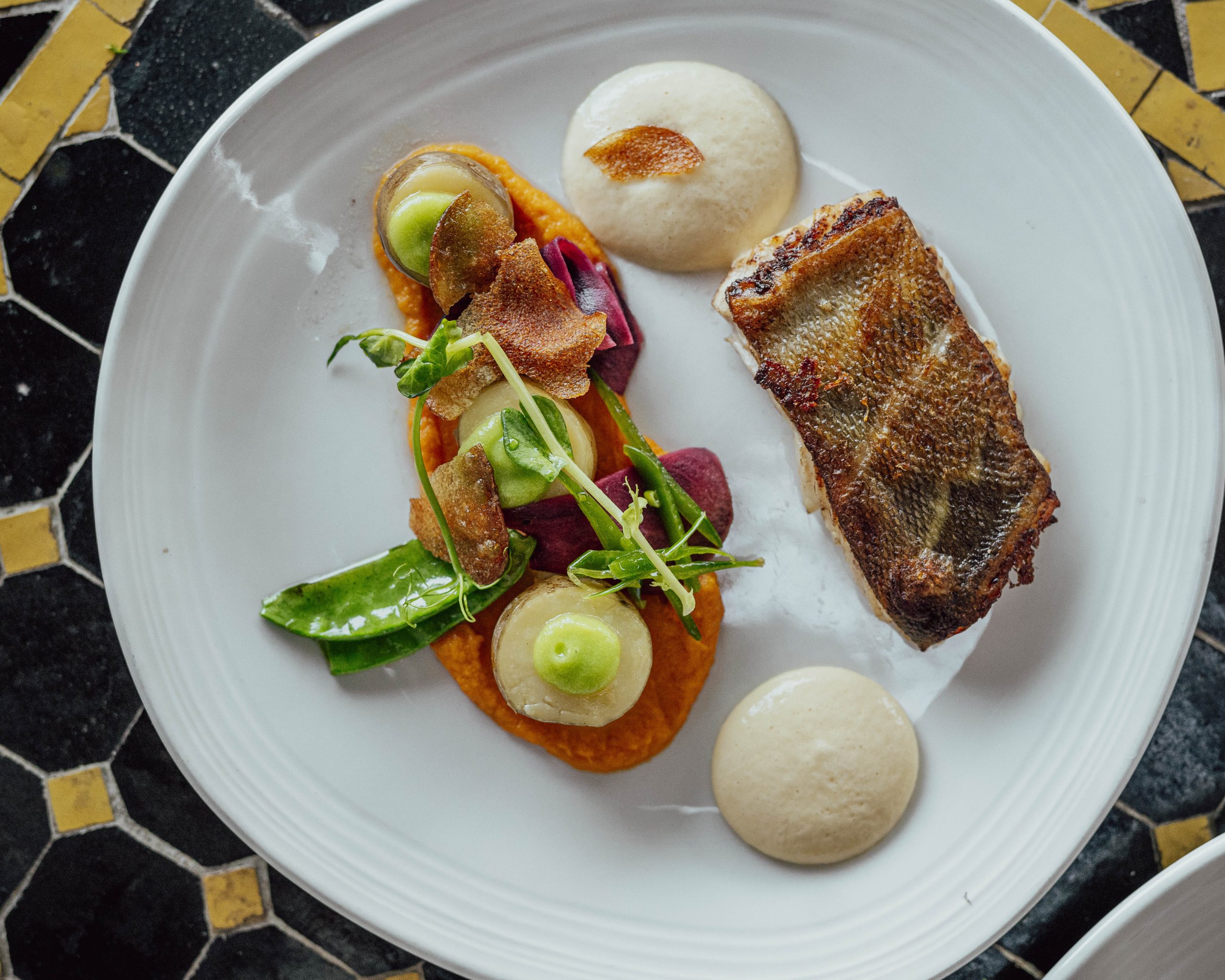
At Merimakasiini, we share this commitment to ingredients with real origins and genuine freshness. Our kitchen works with locally sourced and seasonal produce, and the same principles that drive Finnish foraging Finland traditions, namely freshness, purity, and respect for what nature provides, guide how we approach our seasonal Finnish restaurant menu. Our chef Markus Kornmayer designs dishes around what is genuinely at its best, whether that is fish delivered the same morning by local fishermen or seasonal ingredients that reflect the time of year.
The broader trend in Finnish restaurant culture is toward transparency about sourcing and a genuine celebration of wild and local flavours. Foraged ingredients such as wild berries, mushrooms, and coastal plants appear not as novelties but as natural expressions of where Finnish food comes from. For diners, this creates a connection between the plate and the landscape that is difficult to replicate with imported or industrially produced ingredients.
If you want to experience Finnish food culture at its most genuine, look for restaurants and producers that treat seasonality as a real constraint rather than a marketing term. The best Finnish food, whether foraged at home or prepared by a skilled kitchen, shares the same foundation: ingredients that are honest, fresh, and rooted in the landscape they came from.